


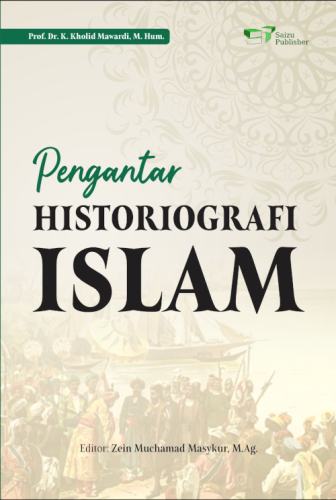
Pengantar Historiografi Islam
Keywords:
Sejarah, IslamSynopsis
Buku ini menawarkan pembaca pandangan mendalam dan komprehensif mengenai historiografi Islam, yaitu studi tentang penulisan sejarah Islam. Menggali lebih dalam dari sekadar catatan peristiwa masa lalu, buku ini mengupas bagaimana peristiwa-peristiwa tersebut direkonstruksi, dianalisis, dan diinterpretasikan oleh sejarawan. Penulis menjelaskan berbagai perspektif dan metodologi yang digunakan dalam historiografi Islam, dari masa klasik hingga kontemporer, serta pengaruh filsafat dan ilmu pengetahuan terhadap penulisan sejarah.
Dengan bahasa yang lugas dan analisis yang tajam, buku ini tidak hanya bermanfaat bagi mahasiswa sejarah dan ilmu Islam, tetapi juga bagi masyarakat umum yang ingin memahami sejarah Islam secara lebih mendalam. Penulis juga membahas tantangan modernitas terhadap historiografi Islam, termasuk kemunculan orientalisme dan gerakan pembaharuan historiografi Islam. Buku ini diharapkan dapat menjadi sumber referensi yang berharga dan membuka wawasan baru bagi pembaca dalam memahami sejarah dan perkembangan Islam.
References
Abdullah, A. (2016). Gerakan Radikalisme dalam Islam: Perspektif Historis. ADDIN, 10(1), 1. https://doi.org/10.21043/addin.v10i1.1127
Abdullah, Y. A. G. (2004). Historiografi Islam dari klasik hingga modern (Terj. Mu’jam al-Mu’arrikhin al-Muslimin: hatts Al-Quran al-Tsani ‘Asyr al-Hijri). PT Raja Grafindo Persada.
Achmad, S. (2021). Pendidikan Islam Berbasis Kisah: Nilai Pendidikan Islam dalam Sirah Nabi. INSANIA : Jurnal Pemikiran Alternatif Kependidikan, 26(2), 161–174. https://doi.org/10.24090/insania.v26i2.5201
Afridi, M. A. (n.d.). Contribution of Muslim Scientists to the World: An Overview of Some Selected Fields.
Alagha, J. (2017). Ibn Khaldun: A sociology of history. International Sociology, 32(2), 180–188. https://doi.org/10.1177/0268580916687460
Aljifri, K. (2014). A New Approach of Measuring Earnings Quality in Islamic Banks. Journal of Accounting & Marketing, 03(01). https://doi.org/10.4172/2168-9601.1000117
Al-Tamimi, A. A. H. (2021). Historian Methodology Ai-Tabari’s Model. RIMAK International Journal of Humanities and Social Sciences, 03(05), 341–349. https://doi.org/10.47832/2717-8293.5-3.32
Amanah, N., Mujahidin, E., & Andriana, N. (2022). Analysis of Curriculum Planning by Using Importance Performance Analysis Technique. Al-Idarah : Jurnal Kependidikan Islam, 12(2), 173–182. https://doi.org/10.24042/alidarah.v12i2.13529
Ang, S., & Low, K. (2012). Islamic Leadership Lessons from the 9th Century Based on Ibn Khaldun’s Muqaddimah. Educational Research, 3, 212-219.
Anjum, O. (2016). The Benefits of Studying Islamic History. Al Jumuah Magazine. https://aljumuah.com/the-benefits-of-studying-islamic-history/
Archambault, A. N., Lin, Y., Jeon, J., Harrison, T. A., Bishop, D. T., Brenner, H., Casey, G., Chan, A. T., Chang-Claude, J., Figueiredo, J. C., Gallinger, S., Gruber, S. B., Gunter, M. J., Hoffmeister, M., Jenkins, M. A., Keku, T. O., Marchand, L. L., Li, L., Moreno, V., … Hayes, R. B. (2021). Nongenetic Determinants of Risk for Early-Onset Colorectal Cancer. JNCI Cancer Spectrum, 5(3), pkab029. https://doi.org/10.1093/jncics/pkab029
Arif Billah, A. A. A. A., & Islam, M. A. (2015). Accounting in Islamic Perspective: A Timely Opportunity, a Timely Challenge. IIUC Studies, 9, 187–214. https://doi.org/10.3329/iiucs.v9i0.24020
Arkoun, Mohammed (2007). Rethinking Islam: A Critique of Orientalist Ideology. Boulder: Lynne Rienner Publishers.
ASAD, T. (2009). The Idea of an Anthropology of Islam. Qui Parle, 17(2), 1–30. http://www.jstor.org/stable/20685738
Asad, Talal (2003). Formations of the Secular: Christianity, Islam, Modernity. Stanford: Stanford University Press.
Asfiah, N. (2021). Do Islamic social entrepreneurship moderate Islamic leadership and emotional intelligence? Evidence from micro and small enterprises fostered by ‘Aisyiyah. Journal of Innovation in Business and Economics, 5(01), 23–34. https://doi.org/10.22219/jibe.v5i01.16221
Ashaari, M. F., Ismail, Z., Puteh, A., Samsudin, M. A., Ismail, M., Kawangit, R., Zainal, H., Nasir, B. M., & Ramzi, M. I. (2012). An Assessment of Teaching and Learning Methodology in Islamic Studies. Procedia - Social and Behavioral Sciences, 59, 618–626. https://doi.org/10.1016/j.sbspro.2012.09.322
Awad, C. (2023). Social Philosophy According to Ibn Khaldun: A Study of The Concept of “Human Urbanization” and Its Relationship to Progress. International Journal for Scientific Research, 2(9), 187–212. https://doi.org/10.59992/IJSR.2023.v2n9p9
Awaliyah Fitri, S. R., Natsir, N. F., & Haryanti, E. (2022). The Dialectical Relationship Between Religion and Science: A Study of the Paradigms of Islamic Science at the State Islamic University, Syarif Hidayatullah, Jakarta. Jurnal Penelitian Pendidikan Islam, 10(1), 1. https://doi.org/10.36667/jppi.v10i1.863
Ayub, A. (2018). Matn Criticism and its Role in The Evaluation of Hadith Authenticity. IJISH (International Journal of Islamic Studies and Humanities), 1(1), 69–75. https://doi.org/10.26555/ijish.v1i1.136
Babinger, F. (1978). Mehmed the Conqueror and his time (R. Manheim, Trans.). Princeton University Press.
Bhat, S. (2016). Muslim contribution to history writing during the medieval times: An overview. Asian Journal of Multidisciplinary Studies, 4.
Bhat, S. (2017). On understanding the Islamic concept of history: A conceptual study. International Research Journal of Multidisciplinary Studies, 3.
Bhat, S.-U. (2022). The Life and Work of Muhammad Ibn Jarir al-Tabari. Khazanah Pendidikan Islam, 4(1), 28–36. https://doi.org/10.15575/kp.v4i1.18071
Brockopp, J. E. (Ed.). (2010). The Cambridge companion to Muhammad. Cambridge University Press.
Brown, A. C. (1986). Ibn Ishaq. In B. Lewis, C. Pellat, & J. Schacht (Eds.), The Encyclopedia of Islam (Vol. 3, pp. 368-369). E. J. Brill.
Çaksu, A. (2017). Ibn Khaldun and Philosophy: Causality in History. Journal of Historical Sociology, 30(1), 27–42. https://doi.org/10.1111/johs.12149
Chande, A. (2023). Global Politics of Knowledge Production: The Challenges of Islamization of Knowledge in The Light of Tradition Vs Secular Modernity Debate. Nazhruna: Jurnal Pendidikan Islam, 6(2), 271–289. https://doi.org/10.31538/nzh.v6i2.3502
Chotimah, C., & Agustina, A. M. (2019). THE ISLAMIC FEMINISM: A Methodological Reconstruction of Contemporary Islamic Era. Al-Tahrir: Jurnal Pemikiran Islam, 19(2), 261–278. https://doi.org/10.21154/altahrir.v19i2.1742
Cole, O., Soufani, K., & Tse, T. (2013). Notes on Islamic economics and finance. International Journal of Trade and Global Markets, 6(1), 83. https://doi.org/10.1504/IJTGM.2013.051551
Dale, S. F. (2006). Ibn Khaldun: The Last Greek And The First Annaliste Historian. International Journal of Middle East Studies, 38(3), 431–451. https://doi.org/10.1017/S0020743806412423
Daston, L. (1992). Objectivity and the Escape from Perspective. Social Studies of Science, 22(4), 597–618. https://doi.org/10.1177/030631292022004002
Davis, V. (2007). The study of religion. Routledge.
Dodge, B. (2011). Muslim voices in the modern world. Oxford University Press.
Fadriati, F. (2016). Prinsip-Prinsip Metode Pendidikan Islam Dalam Alquran. Ta’dib, 15(1). https://doi.org/10.31958/jt.v15i1.220
Feener, R. M. (2012). Social Engineering through Sharī’a: Islamic Law and State-Directed Da’wa in Contemporary Aceh. Islamic Law and Society, 19(3), 275–311. https://doi.org/10.1163/156851911X612581
Fournout, O. (2017). The Hero-Leader Matrix in Business and Cinema. Journal of Business Ethics, 141(1), 27–46. https://doi.org/10.1007/s10551-016-3063-4
Gesink, I. F. (2005). Wahhabi Islam: From Revival and Reform to Global Jihad: DeLong-Bas, Natana J.: New York: Oxford University Press, 370 pp., Publication Date: June 2004. History: Reviews of New Books, 33(2), 76–77. https://doi.org/10.1080/03612759.2005.10526514
Ghani, U. (2022). Tradition And Its Significance Within Islam And The Abrahamic Faiths. Journal Of Hadith Studies, 53–60. https://doi.org/10.33102/johs.v7i1.170
Gkotzaridis, E. (2008). Revisionism in the Twentieth Century: A Bankrupt Concept or Permanent Practice? The European Legacy, 13(6), 725–741. https://doi.org/10.1080/10848770802358112
Gottschalk, L. (1950). Understanding History: A Primer of Historical Method. New York: Alfred A. Knopf.
Günther, S. (2006). Be Masters in That You Teach and Continue to Learn: Medieval Muslim Thinkers on Educational Theory. Comparative Education Review, 50(3), 367–388. https://doi.org/10.1086/503881
Hakak, S., Kamsin, A., Zada Khan, W., Zakari, A., Imran, M., Bin Ahmad, K., & Amin Gilkar, G. (2022). Digital Hadith authentication: Recent advances, open challenges, and future directions. Transactions on Emerging Telecommunications Technologies, 33(6), e3977. https://doi.org/10.1002/ett.3977
Hallaq, W. B. (2004). The Origins and Evolution of Islamic Law (1st ed.). Cambridge University Press. https://doi.org/10.1017/CBO9780511818783
Hallaq, W. B. (2009). Sharīʿa: Theory, Practice, Transformations. Cambridge University Press. https://doi.org/10.1017/CBO9780511815300
Haryanto, S. (2017). Pendekatan Historis Dalam Studi Islam. Manarul Qur’an: Jurnal Ilmiah Studi Islam, 17(1), 127–135. https://doi.org/10.32699/mq.v17i1.927
Hatimah, H., Ludigdo, U., & Achsin, M. (2019). Epistemologi islam sebagai metodologi penelitian. IMANENSI: Jurnal Ekonomi, Manajemen Dan Akuntansi Islam, 2(2), 1–6. https://doi.org/10.34202/imanensi.2.2.2017.1-6
Hermansyah, H. (2014). Islam And Local Culture In Indonesia. Al-Albab, 3(1). https://doi.org/10.24260/alalbab.v3i1.94
Herrup, C. (1996). Revisionism: What’s in a Name? Journal of British Studies, 35(2), 135–138. https://doi.org/10.1086/386101
Hillenbrand, C. (1999). The Crusades: Islamic perspectives. Edinburgh University Press.
Hirschler, K. (2005). pre-eighteenth-century traditions of revivalism: Damascus in the thirteenth century. Bulletin of the School of Oriental and African Studies, 68(2), 195–214. https://doi.org/10.1017/S0041977X05000108
Hodgson, M. G. S. (1974). The venture of Islam (Vol. 1). University of Chicago Press.
Huda, A. (2010). Epistemologi Gerakan Liberalis, Fundamentalis, Dan Moderat Islam Di Era Modern. De Jure: Jurnal Hukum Dan Syar’iah, 2(2). https://doi.org/10.18860/j-fsh.v2i2.2977
Ibn al-Athir. (2006-2008). The chronicle of Ibn al-Athir for the Crusading Period from al-Kamil fi'l-Ta'rikh (D. S. Richards, Trans.). Ashgate.
Ibn Kemal. (1963). Tevarih-i Al-i Osman (Nihal Atsız, Trans.). Osmanlı Tarihleri.
Ibn Khaldun. (1967). The Muqaddimah: An introduction to history (F. Rosenthal, Trans.). Princeton University Press.
Ibraham, H. (1988). Leisure, idleness and Ibn Khaldun. Leisure Studies, 7(1), 51–57. https://doi.org/10.1080/02614368800390051
Ibrahim, I. A. (2005). The history of al-Tabari: An introduction (Vol. 1). Cambridge University Press.
Ikhtiono, G. (2018). Dualism And Integration System Of Education: Perspektif Sejarah. AKADEMIKA: Jurnal Pemikiran Islam, 23(1), 155. https://doi.org/10.32332/akademika.v23i1.1214
Inalcik, H. (1994). The Ottoman Empire: The Classical Age 1300-1600. Phoenix.
Inalcik, Halil, & Murphey, Rhoads. (1978). Chicago. The University of Chicago Press.
Jajuli, J., Wahidin, K., & Fahrudin, A. (2022). Developing The Quality of Traditional Islamic Boarding School Using The Total Quality Management Model. Asian Social Work Journal, 7(6), 15–23. https://doi.org/10.47405/aswj.v7i6.236
Jamaluddin, D. (2013). Character Education in Islamic Perspective. 2(2).
Jamaludin, J. (2023). Status Pendidikan Agama Islam (PAI) Sebagai Ilmu Pengetahuan, Sebuah Tinjauan Epistemologis. Jurnal Ilmiah Profesi Pendidikan, 8(1b), 492–499. https://doi.org/10.29303/jipp.v8i1b.1134
Joffé, G. (1997). Democracy, Islam and the culture of modernism. Democratization, 4(3), 133–151. https://doi.org/10.1080/13510349708403528
Kamil, S. (2020). Is Islam Compatible with Modernity? An Analysis of Modernity as Modern Civilization. Sunan Kalijaga: International Journal of Islamic Civilization, 3(1), 1. https://doi.org/10.14421/skijic.v3i1.1467
Machouche, S., Bensaid, B., Sabahattin, Zaim, & Ahmed, Z. (2019). Crossroads between Islamic Spirituality and the Instruction of Science. Kemanusiaan the Asian Journal of Humanities, 26(Supplement 1), 23–45. https://doi.org/10.21315/kajh2019.26.s1.2
Kuntowijoyo. (2001). Pengantar Ilmu Sejarah. Yogyakarta: Bentang Pustaka.
Kurniawan, S. (2020). Al-jabiri’s traces in m. Amin abdullah’s idea about integrative-interconnective paradigm for higher education. ATTARBIYAH: Journal of Islamic Culture and Education, 5(1), 60–79. https://doi.org/10.18326/attarbiyah.v5i1.60-79
Lovat, T., & Moghadam, A. (2018). Understanding The History Through Updated Narrative Analysis. In T. Lovat & A. Moghadam, The History of Islam (pp. 49–59). Springer International Publishing. https://doi.org/10.1007/978-3-319-67717-0_4
Maalouf, A. (1984). The Crusades through Arab eyes. Schocken.
Mandavilli, S. R. (2023). Social Responsibility Over Academic Freedom: Emphasizing Ethics and Codes of Conduct Geared for a Scholar’s Duties Towards Science, Society and the Education System in Twenty-First Century Science. SSRN Electronic Journal. https://doi.org/10.2139/ssrn.4531176
Mohd Salehudin, S. N., & H Iksan, Z. (2017). Integration of Tauhid (Faith) Element in Biology Education. JOURNAL OF EDUCATIONAL SCIENCES, 1(1), 11. https://doi.org/10.31258/jes.1.1.p.11-23
Moustafa, T., & Sachs, J. A. (2018). Law and Society Review Special Issue Introduction: Islamic Law, Society, and the State. Law & Society Review, 52(3), 560–573. https://doi.org/10.1111/lasr.12360
Muhammad Yusoff, M. F. B. (2019). On Biographical Dictionaries of Ḥadīṯ Transmitters: Rethinking Development in the Islamic Literature. Al-Bayān – Journal of Qurʾān and Ḥadīth Studies, 17(2), 125–146. https://doi.org/10.1163/22321969-12340075
Muhammad, R., & Nugraheni, P. (2022). Sustainability of Islamic Banking Human Resources Through the Formulation of an Islamic Accounting Curriculum for Higher Education: Indonesian Perspective. SAGE Open, 12(1), 215824402210798. https://doi.org/10.1177/21582440221079838
Mulyanto, H. (2023). Penggunaan Naskah Kuno dan Arsip dalam Historiografi Indonesia: Suatu Tinjauan Kritis. Jumantara: Jurnal Manuskrip Nusantara, 14(1), 45–63. https://doi.org/10.37014/jumantara.v14i1.3301
Mundakir, M. (2020). Rituals Around the Tombs of Wali: The Implementation of Islamic Shari’a of Demak and Kudus Communities. ADDIN, 14(2), 191. https://doi.org/10.21043/addin.v14i2.8201
Muñoz Torres, J. R. (2012). Todavía sobre la objetividad periodística: Hacia la superación de un paradigma fracturado. Estudios Sobre El Mensaje Periodístico, 18(2), 833–854. https://doi.org/10.5209/rev_ESMP.2012.v18.n2.41049
Nawawi, R. (2021). Islam Kaffah dan Relevansinya dengan Masyarakat Indonesia yang Plural dalam Perspektif al-Qur’an. Al-Manar: Jurnal Kajian Alquran Dan Hadis, 7(2), 1–18. https://doi.org/10.35719/amn.v7i2.1
Niaz, M. (2018). Conclusion: Understanding the Elusive Nature of Objectivity. In M. Niaz, Evolving Nature of Objectivity in the History of Science and its Implications for Science Education (Vol. 46, pp. 179–196). Springer International Publishing. https://doi.org/10.1007/978-3-319-67726-2_7
Nidzom, M. F., & Rafsanjani, F. A. (2022). The Historical Criticism and Causality in The Philosophy of History: Ibn Khaldun’s Perspective. TSAQAFAH, 18(2), 227. https://doi.org/10.21111/tsaqafah.v18i2.8118
Nofa, Y., & Mohd Nor, M. R. (2023). Between Traditionalist And Modernist: The Islamic Reformation Of Haji Abdul Latif Syakur In Minangkabau In The 20th Century. Akademika : Jurnal Pemikiran Islam, 28(1), 85. https://doi.org/10.32332/akademika.v28i1.5777
Nurizun, A. A. (2020). Islam dan Transformasi Sosial Dalam Perspektif Pemikiran Kuntowijoyo. Konfrontasi: Jurnal Kultural, Ekonomi Dan Perubahan Sosial, 1(1), 29–45. https://doi.org/10.33258/konfrontasi2.v1i1.84
Osella, F., & Osella, C. (2008). Introduction: Islamic reformism in South Asia. Modern Asian Studies, 42(2–3), 247–257. https://doi.org/10.1017/S0026749X07003186
Pelham, N. (1997). Islamic fundamentalism. International Affairs, 73(3), 602–602. https://doi.org/10.2307/2624331
Pratama, F. S. (2022). Ragam Tema Historiografi Islam Sufistik Klasik di Indonesia. Jurnal Tamaddun : Jurnal Sejarah Dan Kebudayaan Islam, 10(1). https://doi.org/10.24235/tamaddun.v10i1.10142
Pri Handiki, Y. R., & Indrayani, H. (2021). Universalisme Islam: Kemanusiaan Dalam Dialog Agama. Jurnal Ilmu Agama: Mengkaji Doktrin, Pemikiran, Dan Fenomena Agama, 22(1), 18–27. https://doi.org/10.19109/jia.v22i1.9012
Raḥmān, F. (2002). Islam & modernity: Transformation of an intellectual tradition (8. impr). Univ. of Chicago Press.
Rahmawati, M., Aini, F. N., Nuraini, Y., & Mahdi, B. M. (2020). Islamic Worldview: Tinjauan Pemikiran Syech Muhammad Naquib Al-Attas dan Budaya Keilmuan Dalam Islam. NALAR: Jurnal Peradaban Dan Pemikiran Islam, 4(2), 77–91. https://doi.org/10.23971/njppi.v4i2.2165
Ravico, R., Rochmiatun, E., Sustianingsih, I. M., Susetyo, B., & Ramadhona, N. (2023). Implementasi Heuristik dalam Penelitian Sejarah Bagi Mahasiswa. Chronologia, 4(3), 118–128. https://doi.org/10.22236/jhe.v4i3.11089
Rico, T. (Ed.). (2017). The Making of Islamic Heritage: Muslim Pasts and Heritage Presents. Springer Singapore. https://doi.org/10.1007/978-981-10-4071-9
Saburi, A., Nasution, H. B., & Irwansyah, I. (2020). Contribution of NEO Modernism Thoughts on Islamic Thoughts in Indonesia. Budapest International Research and Critics Institute (BIRCI-Journal): Humanities and Social Sciences, 3(2), 1443–1452. https://doi.org/10.33258/birci.v3i2.1007
Said, E. W. (1978). Orientalism. Vintage Books.
Sajati, C. S. (2022). Pemahaman Sejarah Transnasional Sebagai Sarana Membentuk International-Mindedness. Jazirah: Jurnal Peradaban Dan Kebudayaan, 2(2), 98–119. https://doi.org/10.51190/jazirah.v2i2.23
School of Postgraduate, State Islamic University of North Sumatra, Jamil, S., & Matondang, A. Y. (2017). The Eduction Thoughts Of Sayyid Qutb In The Tafsir Of Fi Zilal Al-Qur’an. International Journal on Language, Research and Education Studies, 1(1), 53–66. https://doi.org/10.30575/2017081203
Senior Research scholar, University of Kashmir, Srinagar, Kashmir, & Bhat, S.-U. (2014). Towards Understanding the Muslim Historiography and Muslim Historians. Journal of Islamic Thought and Civilization, 04(01), 63–74. https://doi.org/10.32350/jitc.41.04
Shamsul. (2005). Making Sense of the Plural-Religious Past and the Modern-Secular Present of the Islamic Malay World and Malaysia. Asian Journal of Social Science, 33(3), 449–472. https://doi.org/10.1163/156853105775013652
Siddiqi, M. (2008). Obstacles of Research in Islamic Economics. Journal of King Abdulaziz University-Islamic Economics, 21(2), 81–93. https://doi.org/10.4197/islec.21-2.4
Spickard, J. V. (2001). Tribes and Cities: Towards an Islamic Sociology of Religion. Social Compass, 48(1), 103–116. https://doi.org/10.1177/003776801048001009
Spiegel, G. M. (2007). Revising The Past / Revisiting The Present: How Change Happens In Historiography. History and Theory, 46(4), 1–19. https://doi.org/10.1111/j.1468-2303.2007.00425.x
Suminto, A., & Sisminawati, S. (2020). Uṣūl Al-Fiqh Sebagai Metode Penggali Hukum Syarak. Al-Syakhsiyyah: Journal of Law & Family Studies, 2(1), 1–20. https://doi.org/10.21154/syakhsiyyah.v2i1.2157
Susilo, A., & Sarkowi, S. (2019). Perubahan Sosial Ekonomi Masyarakat Surulangun Pasca Menjadi ibukota Onder Adeling Rawas Tahun 1901-1942. Diakronika, 19(1). https://doi.org/10.24036/diakronika/vol19-iss1/76
Tabroni, I., Purnama Sari, R., Apendi, R., & Kurnia Adam, D. (2022). Character Education Of The History Of Islamic Civilization. At-Tahsin : Jurnal Manajemen Pendidikan, 2(1), 27–36. https://doi.org/10.59106/attahsin.v2i1.59
Takaliuang, M. P. (2012). Faktor-Faktor Penghambat Dan Penunjang Pertumbuhan Gereja. Missio Ecclesiae, 1(1), 103–129. https://doi.org/10.52157/me.v1i1.22
Umar, A. M. (1988). Historiografi Islam. CV Rajawali.
Usama ibn Munqidh. (2008). The Book of Contemplation: Islam and the Crusades (Diterjemahkan oleh P. M. Cobb). Penguin Classics.
Victor, A. J. (2000). Al-Tabari. In B. Lewis, C. Pellat, & J. Schacht (Eds.), The Encyclopedia of Islam (Vol. 10, pp. 102-105). E. J. Brill.
Weber, S. (2018). Pulling the Past into the Present: Curating Islamic Art in a Changing World, a Perspective from Berlin. International Journal of Islamic Architecture, 7(2), 237–261. https://doi.org/10.1386/ijia.7.2.237_1
Yatim, B. (1997). Historiografi Islam. Logos Wacana Ilmu.
Yulianti, E., Sudewa, I. K., & Nama, I. K. (2018). Kepercayaan Tradisional Masyarakat Jawa dalam Novel Suti Karya Sapardi Djoko Damono: Kajian Sosiologi Sastra. Humanis, 579. https://doi.org/10.24843/JH.2018.v22.i03.p02
Zainal, Z. (2014). Gerakan Islamis Di Sumatera Barat Pasca Orde Baru. MIQOT: Jurnal Ilmu-Ilmu Keislaman, 38(2). https://doi.org/10.30821/miqot.v38i2.103
Zakhidova, S. (2023). Al-Biruni’s Concept Of History. Reconstructing the Past: Journal of Historical Studies, 45–53. https://doi.org/10.54414/DVDV3344
Zaman, F. (2019). The Future Of Islam, 1672–1924. Modern Intellectual History, 16(3), 961–991. https://doi.org/10.1017/S1479244318000422
Zaman, H. S., & Kakar, K. K. (2022). Cross Cultural Context of Contemporary Islamic Thought. Al Basirah, 11(01), 01–16. https://doi.org/10.52015/albasirah.v11i01.28
Published
August 9, 2024
Categories
Copyright (c) 2024 Kholid Mawardi
Details about the available publication format: Paperback
Paperback
ISBN-13 (15)
978-623-89233-1-1
Date of first publication (11)
2024-08-09
Hijri Calendar
doi
10.24090/saizupub.142.123
Physical Dimensions
140mm x 230mm x 14mm
Details about the available publication format: PDF
PDF
Date of first publication (11)
2024-08-09
Hijri Calendar
doi
10.24090/saizupub.142.124